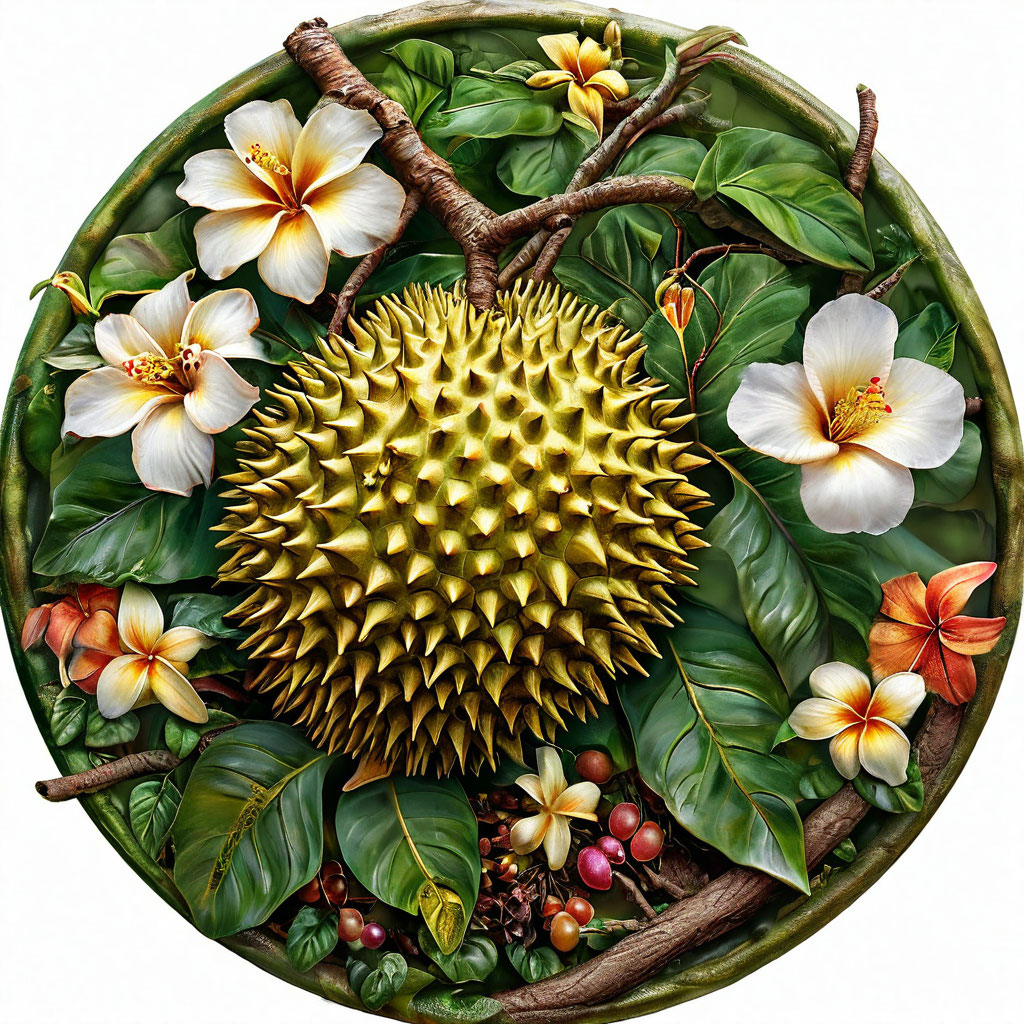
How to Grow a Good Fruit Tree Seedling from Scratch
While developing our family’s tropical fruit garden project, we ran into one specific problem. Most of the seedlings sold at local nurseries have deformed roots. This becomes especially obvious under the extreme conditions of our garden — a long dry season with no rain, and poor, infertile soil. Trees with a strong root system grow significantly faster. They also start fruiting much earlier. Through trial and error, we’ve developed our own method for planting new seedlings in open ground.
The Problem with Nursery Seedlings in Indonesia
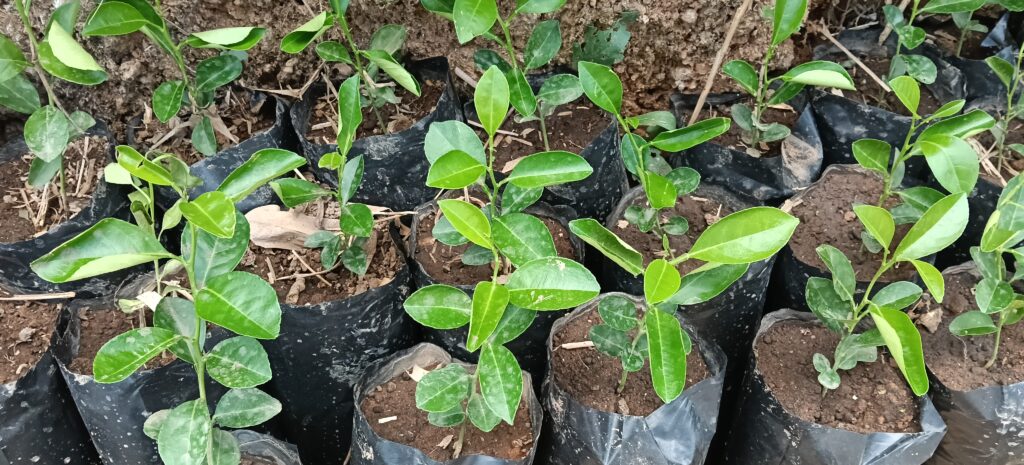
The main issue with seedlings from local nurseries comes down to how they’re grown. Rootstocks are sown into small polybags — 20×30 cm or even smaller. This causes the main taproot to become deformed by the time the plant is just 3-4 months old. For most tropical fruits — durian, mango, avocado — the taproot reaches a depth of 50 cm within just 3 months of the seed being planted. A strong, straight taproot is essential. It guarantees the tree’s health, its fast growth, and an early start of fruiting.
Preparing the Source of Scions
We buy varietal seedlings (certified ones, ideally) from a trusted nursery. We prepare a soil mix of 2/4 garden soil, 1/4 vermicompost, and 1/4 rice husk ash. We transplant the seedlings into appropriately sized planter bags, removing any deformed or overgrown roots. These trees will later become our source of scions for grafting. The rate of successful grafting is much higher, if you use fresh scions.
Preparing the Planting Hole
For any fruit tree, we dig a hole at least 1 meter wide and 1 meter deep. For durian specifically, we only use vermicompost as fertilizer. For other fruits, well-fermented manure works fine too. We mix the soil with vermicompost or manure — 2 bags of fresh vermicompost, or 1 bag of dried granules. We add 0.5 bag of wood ash. We also add 1-2 kg of neem leaf powder (Azadirachta Indica) to protect roots from fungi and pests.
Timing for Durian
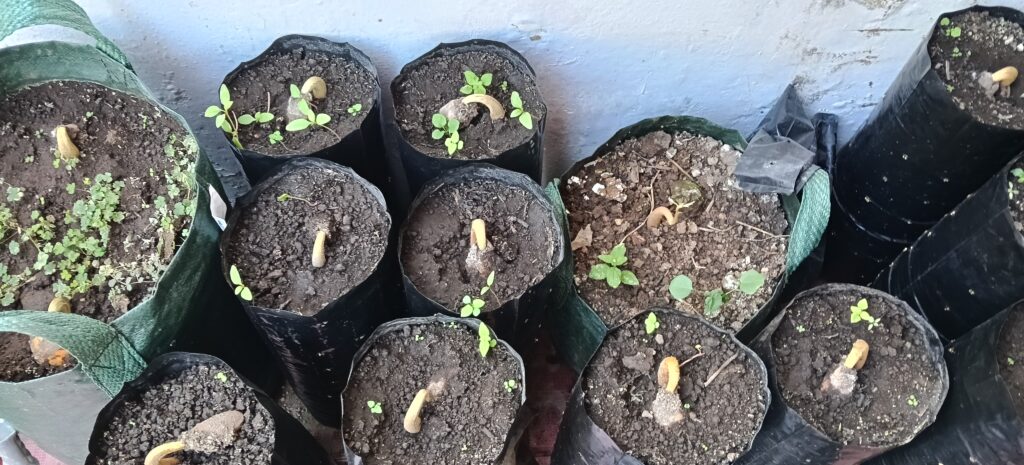
We sow the seeds in tall polybags, 15×40 cm. As soon as the seeds sprout and the shoots straighten up, we graft them. At this young age grafting is easy. That’s because the cambium layer of a young seedling is thick and highly active. We use the simplest method — “cleft grafting,” done with a sharp grafting knife or a razor blade. About a month later, the buds on the scion open up.
Once the leaves have grown a bit, we move the seedling to its future planting spot. We let it acclimate there for 7-10 days. At the same time, we prepare the hole and the soil mix. Manure — even well-rotted manure — can’t be used for durian. It tends to introduce weed seeds and fungal spores. We fill the hole with the soil mix to a depth of about 70 cm (70% of hole depth), then water it thoroughly.
Once the seedling has acclimated, we place it in the center of the hole. We carefully cut open and remove the plastic poly bag, taking care not to break up the soil ball or damage the roots. We fill in the rest with the soil mix, water it, and gently tamp it down. Around the young tree, a hump about 20-25 cm high should form. During the rainy season, the soil will settle, and the hump will end up nearly level with the ground.
Timing for Mango and Avocado
We sow mango seeds in poly bags 30 cm tall. As soon as the sprout reaches 10 cm, we plant it in its permanent spot. We prepare the hole and soil mix in advance for this. A year later, during a cool spell in the dry season, we graft the variety onto it.
Timing for Citrus
We buy citrus rootstocks — either JC (Japansche Citroen) or RL (Rough Lemon). What we do next depends on the rootstock’s age and the current season.
Young rootstocks, under 30 cm tall (cabutan — seedlings pulled straight out of the ground), get different treatment depending on timing. During the dry season, we first plant them in 10×20 cm poly bags. We let them grow there until they reach pencil thickness, or until the rainy season arrives. If it’s already the rainy season, though — or if we can water them regularly — we can plant these same rootstocks straight into the ground, skipping the poly bag stage entirely.
Larger rootstocks, already pencil-thick, always go straight into the ground. This holds regardless of the season. They establish well even if watering is rare.
Once a rootstock has acclimated and shows new growth, it’s ready for grafting. We either graft it right away using the cleft method, or wait a year and use the bark-graft method instead.
Conclusion
These methods aren’t a universal recipe for every garden. They’re a solution we developed specifically for our own plot’s conditions: a long dry season with no rain, and poor, infertile soil. Under these conditions, a deformed or weak taproot becomes a critical problem. If the root hasn’t gone deep enough in time, the tree simply has nowhere to draw moisture from during a drought. That’s why we graft durian seedlings while they’re still very young, right in the poly bag. It’s also why we move mango, avocado, and citrus into the ground as early as possible — so the root system develops directly in real conditions, not in a sheltered nursery environment.
On a wetter plot, or in more fertile soil, some of these precautions might be unnecessary. But given our starting conditions, early transplanting and protecting the taproot from deformation in a cramped poly bag turned out to be the deciding factor. It determined whether a tree survives at all, and how soon it starts bearing fruit.