Red & Mosaic Sweet Corn in Indonesia: 90 Days to Garden Magic
The Garden’s Best-Kept Secret
What if your garden could produce crops that look like artwork and taste like heaven—all while demanding almost nothing from you? No fertilizer bottles. No spray schedules. Just pure, effortless abundance.
This rainy season, we discovered such a miracle: glutinous sweet corn in colors that shouldn’t exist in nature, yet somehow do.
Two Extraordinary Varieties
As monsoon clouds gathered, we planted two fascinating types of jagung ketan:
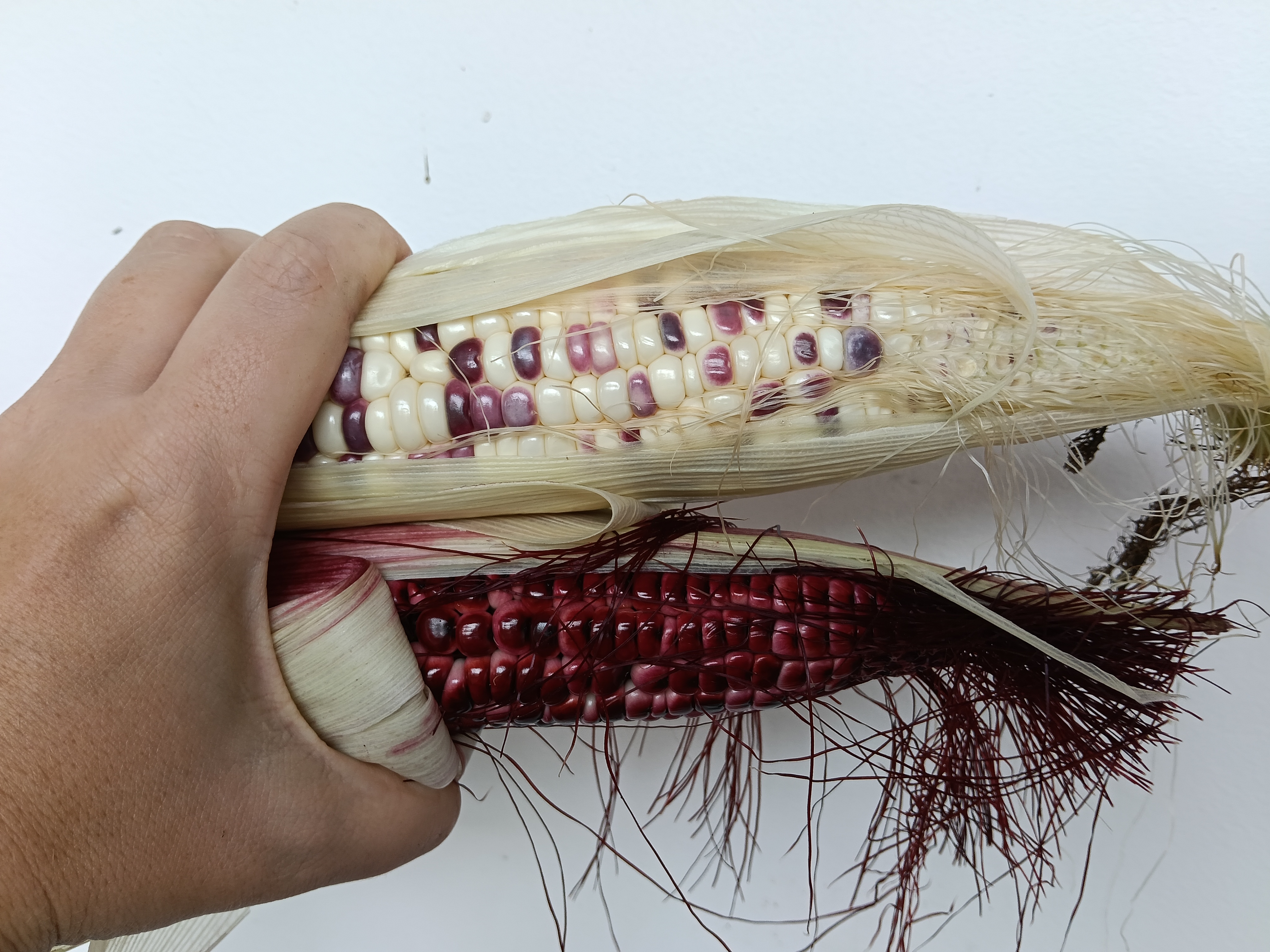
A burgundy variety promising kernels the color of fine wine, each one glistening like a polished ruby. This wasn’t ordinary corn; this was edible jewelry.
Mosaic variety – Rumored to produce abstract art on every ear—swirls of cream, lavender, and deep purple dancing together like an impressionist painting rendered in kernels.
We planted them with a simple promise: grow naturally – just seeds, soil, sun, and rain.
Ninety Days of Transformation
Through torrential downpours and tropical heat, our corn climbed skyward. Deep green leaves caught rainwater and channeled it to thirsty roots. The garden’s ecosystem—earthworms, beneficial insects, mycorrhizal fungi—did the work that chemicals usually claim.
Three months later, harvest time arrived with subtle signals: browning silk tassels, husks pulling back, ears firm to the touch.
The Unveiling
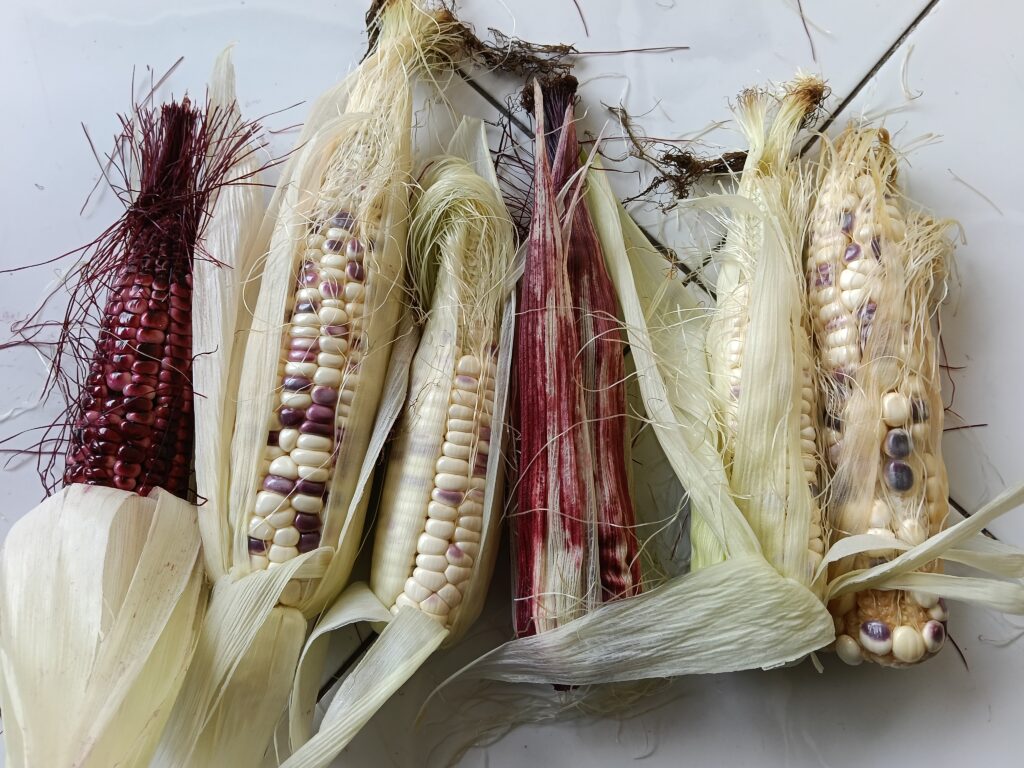
Peeling back the first red ear left us speechless. “Burgundy” barely captures what we saw—kernels glowing with inner fire, shifting between ruby and garnet depending on the light. Each one plump, glossy, luminescent. A geometric masterpiece that no designer could improve.
Then came the mosaic variety. Pure wonder.
Imagine abstract art in kernels. Pristine white flowing into soft lilac, deepening to rich purple, lightening to cream again. No two ears identical. Some showed bold color blocks; others displayed delicate stippling. Some kernels were solid; others showed gradients within a single seed, fading from white to purple.
Was this food or art? Both, gloriously both.
We expected visual spectacle. We didn’t expect such extraordinary taste.
The glutinous texture created something unique—kernels simultaneously tender and substantial, releasing sweetness gradually.
The Lesson: Let Nature Lead
These plants taught us about true resilience. Without synthetic nitrogen, they developed deeper roots. Without pesticides, they activated natural defenses, producing more antioxidants. The rainy season provided perfect irrigation—heavy downpours followed by sunshine in nature’s own rhythm.
The spectacular colors aren’t decorative—they’re nutritional signatures. Burgundy signals anthocyanins (same compounds as red wine and blueberries). Multiple pigments mean multiple phytonutrients. This is food as medicine, nutrition wrapped in beauty.
Your Turn to Grow Magic
Key tips from our experiment:
- Plant at your rainy season’s start for natural irrigation
- Choose traditional glutinous/waxy corn varieties
- Skip the chemicals—trust the ecosystem
- Harvest at 90 days when silk browns and ears feel full
- Expect the unexpected—every ear is unique artwork
Perfect for: Organic gardeners, anyone wanting low-maintenance crops with spectacular results, those seeking nutritious heirloom varieties, gardeners who believe food should be beautiful.
Sweet corn in burgundy and mosaic proved that the best gardening is often the simplest. Plant. Wait. Wonder. Harvest miracles.