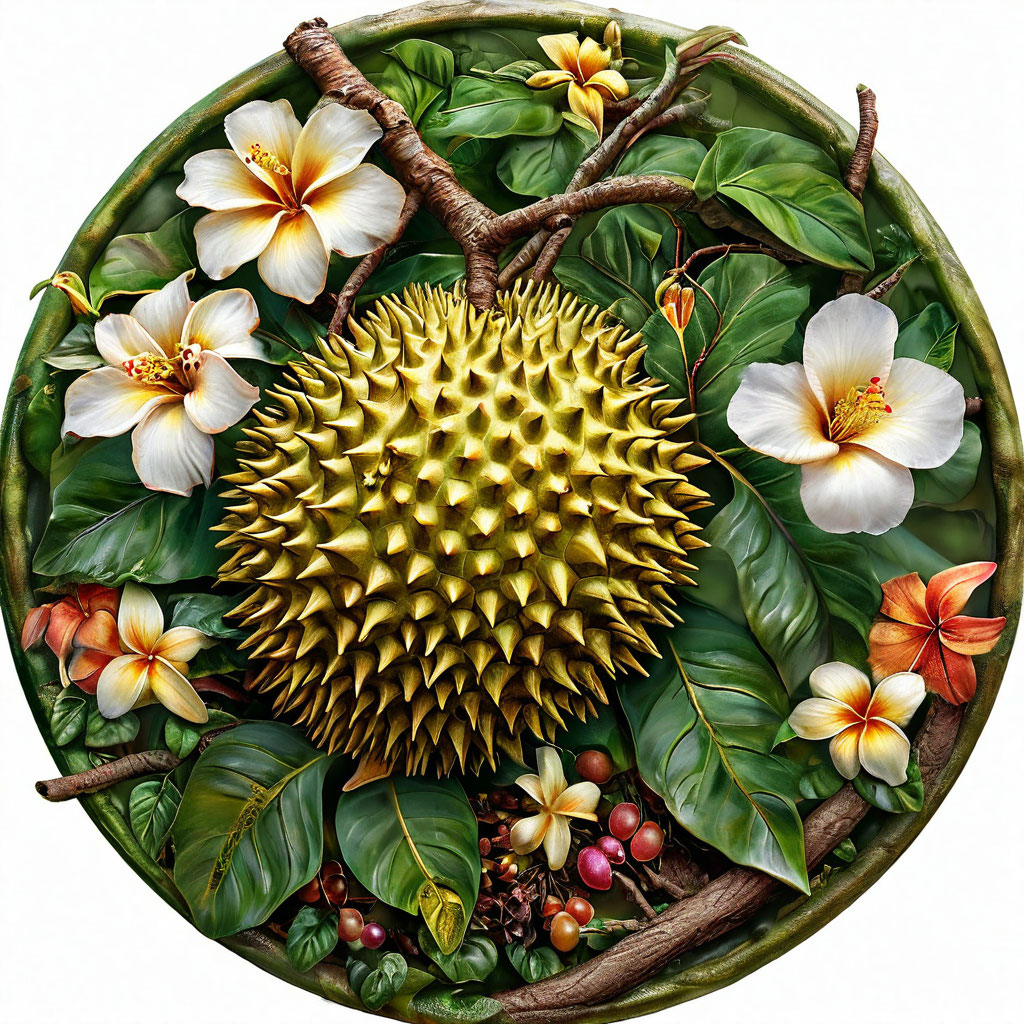
Durian Varieties Grown in Indonesia
Imagine a fruit the size of a football, covered in sharp spikes, emitting an aroma that some compare to heavenly bliss while others find completely unbearable. This is durian (Durio zibethinus), the king of tropical fruits, before which it’s impossible to remain indifferent.
The first encounter with durian often becomes a small adventure. You break open the spiky shell and see creamy golden flesh that resembles the most delicate ice cream or custard in texture. You take one bite — and enter a completely new world of flavors. Some detect notes of caramel and vanilla, others — hints of almond and cream, and some even sense a slight alcoholic undertone.
There’s an incredible diversity of durian varieties in the world, and many have their unique codes. The numbering system with the letter D (from the word Durian) helps distinguish registered varieties: D24 is the famous Sultan, D168 is Masmuar with its balance of sweetness and slight bitterness, and D197 is the legendary Musang King, the dream of any durian connoisseur. However, many local varieties proudly bear only their names, needing no numerical designations. In Indonesia, most areas cultivate Monthong varieties (Chanee, Bawor), the amazingly flavored Black Thorn variety (Duri Hitam, Ochee), as well as interesting local cultivars — Lay, Mantuala, Simimang, Matahari, Menoreh. There are also unique varieties with red and red-yellow flesh: Durian Merah (from Indonesian “merah” — red) and Durian Pelangi (from Indonesian “pelangi” — rainbow).
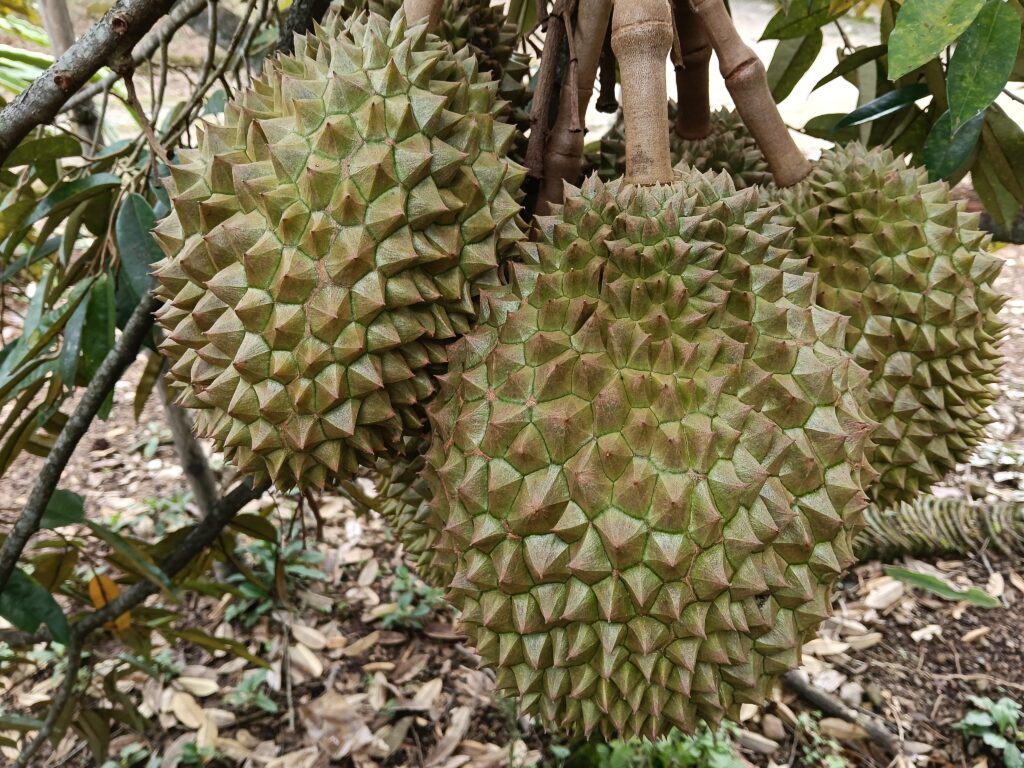
In our garden on the slopes of Java grow trees of various varieties. Here’s the premium Musang King with its rich creamy flavor, and Thai Monthong Chani with soft sweet flesh, and Masmuar with its complex flavor profile. Local Indonesian varieties thrive alongside them: large-fruited Bawor, Namlung with its characteristic leaf shape, Super Tembaga from Bangka Belitung island, as well as Ochee, Jantung, and the classic Sultan.
Each variety is a separate story, a separate character. Fruits differ in shape and size: from compact round ones to impressive elongated ones reaching three to four kilograms. But the main difference, of course, lies in taste. Some varieties amaze with honey sweetness and caramel undertones, others play on the contrast of sweet and slight bitterness, still others surprise with complex multi-layered notes that unfold gradually, like fine cognac.
What unites all cultivated varieties is that very creamy texture that distinguishes them from wild durians. Wild-growing fruits, which locals call durian kampung, have thin flesh, large seeds, and unpredictable taste — you might pick a divine fruit or be disappointed. Cultivated durians, however, delight with thick flesh, small seeds, and that recognizable taste for which they’re grown.
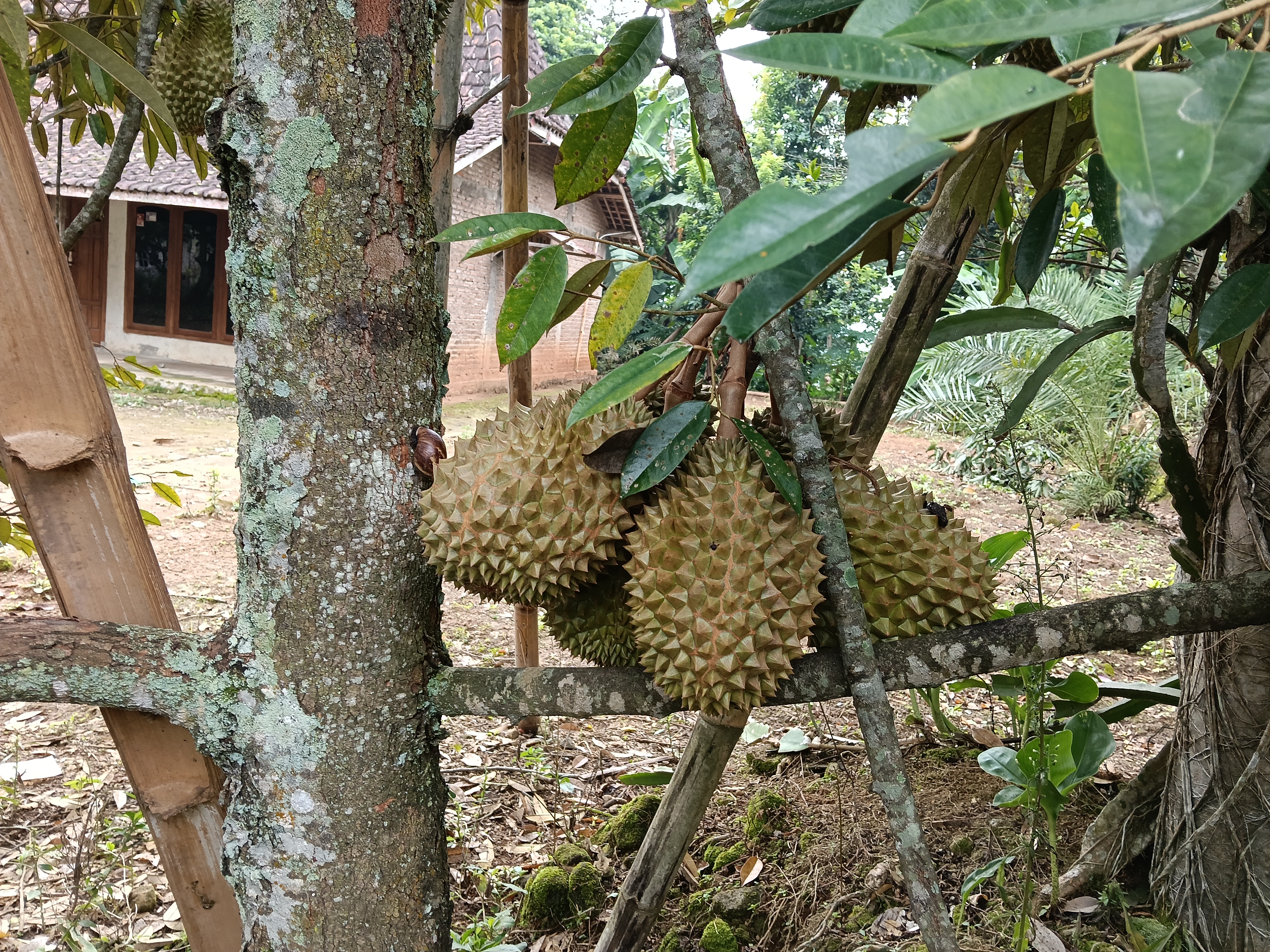
Remarkably, many local varieties from Sumatra, Java, Kalimantan, and other Indonesian islands are in no way inferior to world-famous premium varieties. Moreover, they often surpass them in something of their own: resistance to local pests, adaptation to climate, unique flavor nuances not found in commercial varieties. These are true hidden gems of tropical gardening, and discovering them means becoming a true connoisseur of the king of fruits.